
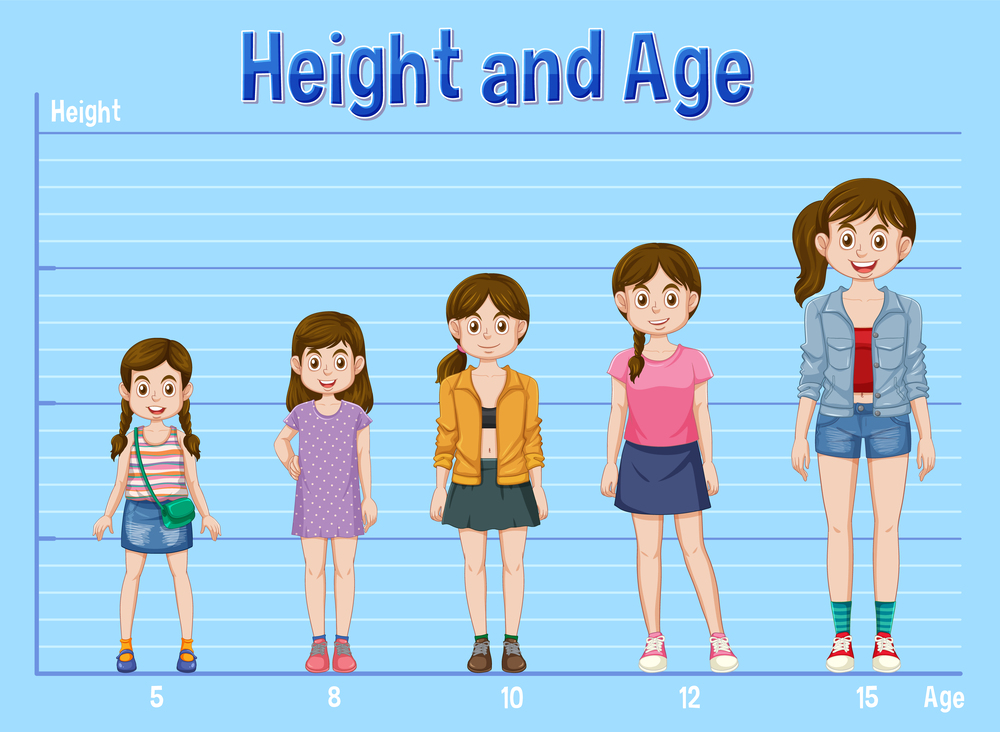
Height and Weight Chart For Girls According to Age
Girls are said to grow at an astonishing pace during the first two decades of life. Here, the growth patterns are highly individual and predictable. Educators, parents and clinicians depend heavily on the standardized weight and height charts, which are usually known as “growth charts”. These charts are normally used for comparing an individual child’s measurements to those of thousands of peers of the same sex and age.
All these charts can help in determining whether a girl’s development is within a normal range or if future evaluation might be required. Instead of the rigid “ideal” figures, these charts help in showing ranges around the percentile cut-offs and median values. These reflect the natural variation within the healthy population. Since girls are said to go through puberty earlier than boys, their weight and height increase quickly, usually between the ages of 8 and 10.
Some of them even reach near-adult height between the ages of 14 and 15. The height and weight chart for girls is not just numbers. They are known as clinical tools, which experts use for monitoring nutritional status, health trends, and developmental progress. Let’s gain more insights about it from this blog.
The Weight and Height Chart for Girls: An Age-by-Age Overview
The following table displays the height and weight chart for girls, and it contains the average normative ages for girls as they grow. These are just approximations, but can help physicians, parents and even caregivers to track down the general development instead of diagnosing conditions.
Ages 0 to 2 Years: Rapid Development
Infants are said to grow much faster in life. Their weight and height keep changing every month. The table below offers a clear insight:
| Age | Height (cm) | Weight (kg) |
| Birth | 46 to 53 | 2.4 to 4.2 |
| 1 month | 50 to 57 | 3.2 to 5.4 |
| 2 months | 53 to 61 | 4.0 to 6.5 |
| 4 months | 58 to 66 | 5.1 to 8.1 |
| 6 months | 61 to 70 | 5.8 to 9.2 |
| 1 year | 74 | 8.9 |
Ages 3 to 10 Years: Steady Development
During early childhood, development continues at a steady pace with a slow increase in weight and height. Here is a height and weight chart for girls for this specific age group:
| Age | Height Range (cm) | Weight Range (kg) |
| 3 | 91 to 100 | 11.9 to 14.8 |
| 4 | 97 to 105 | 13.6 to 16.7 |
| 5 | 103 to 112 | 15.4 to 19.2 |
| 6 | 108 to 118 | 17.3 to 21.8 |
| 7 | 114 to 124 | 19.5 to 24.6 |
| 8 | 119 to 131 | 22.8 to 25.8 |
| 9 | 124 to 131 | 25.5 to 28.1 |
| 10 | 129 to 136 | 28.1 to 31.2 |
Ages 11 and 18 Years: Puberty and Beyond
When girls enter the puberty stage (usually between the ages of 9 and 11), the development speeds up again before it slows down around the mid-teens. The table below reflects the height and weight categories, ranging from the average to larger and taller, capturing the wider range that is seen during adolescence:
| Age | Average Height (cm) | Typical Weight Range (kg) |
| 11 | 140 | 33 to 40 |
| 12 | 146 | 36 to 45 |
| 13 | 152 | 39 to 50 |
| 14 | 155 to 163 | 42 to 55 |
| 15 | 157 to 166 | 45 to 60 |
| 16 | 158 to 166 | 47 to 62 |
| 17 | 159 | 48 to 64 |
| 18 | 159 to 167 | 50 to 65 |
Small Note: All the figures mentioned above reflect the average patterns. A girl’s individual development accelerated due to early puberty or extended by later growth can differ greatly within the healthy limits.
How the Height and Weight Chart for Girls Can Help?
The girl height and weight chart stands out as an effective tool for medical experts and even parents. Here are some of the ways these charts can help:
Understand the Health Risks
This chart stands out as a useful tool to inspect if your child’s weight matches their height. It is also used to check if there are any health-related risks for being over- or underweight.
Understand the Weight Gain
If your child is experiencing issues in gaining weight, it might be due to an underlying health issue, malnutrition, or insufficient nutrition. It is important to check the weight and height chart as it can tell you if your child needs to keep their focus on eating better, or it is worth seeing a physician for advice on gaining weight.
Getting to Know About the Health Objectives
Using the health and weight chart can help parents set up achievable objectives for better fitness upkeep and weight loss. You can take the help of an expert to make all the necessary changes to your child’s lifestyle and diet.
Apart from that, a chart can also help you organise health initiatives and conduct proper research. It can simplify the categorisation by age group, helping with the accurate establishment of health for all the fitness programs.
Understanding the Overweight Problems
The height and weight carts are essential for detecting an overweight or obese status in your child. These are known as risk factors of chronic health issues like heart conditions, diabetes, and even hypertension. Using these charts can help physicians, caregivers and even parents to assess the health status of their child. It also allows them to make adjustments to their lifestyle and offer medical support to enhance their well-being.
Workouts That Can Help Girls Maintain Weight and Grow Taller
Kids can opt for certain workouts, which can help them get taller and also maintain their weight effectively. Here are some of the best workouts:
Jogging
This is a useful activity to slim down the legs. It can make your child’s bones stronger in the process. When puberty begins in girls, they should practice jogging as it is highly beneficial during that phase. Jogging entails moderate running for a good amount of time at a continuous speed.
Forward Spine Stretch
This is a seated workout that not only helps maintain weight but also increases height in girls. To perform this workout, kids should sit straight and spread their legs out in front. After that, perform the forward spine stretch. Keep them together and extend them as far as possible.
Kids can also maintain a shoulder-width gap. They should inhale, extend their arms and then try reaching their fingers to the toes. Your child should perform 3 to 4 sets with a 10 to 15 second hold to enhance height at home. This workout can extend their spine, which, in turn, contributes to its height-improving effects.
Jump Squats
This workout is a great way to acquire an ideal height for girls because it helps in strengthening the body’s muscles and joints. This helps in raising the body’s height greatly. To practice this workout, your child should begin by standing normally with their body looking at the front.
After that, they should squat down, bringing their knees to their chest while lowering their backs and hips. As they stand up from a squat and start to jump, drive with their legs.
Bar Hanging
Bar hanging is known as one of the most highly-effective ways to increase height and maintain weight in girls. It helps in stretching the lower torso and also reduces the pull on the vertebrates, even when the outcomes are not instantly apparent. Only a sturdy bar set at 7 feet above the ground can help.
Your child must perform this workout 3 to 4 times each day. They should stand up straight with their hands up, lift the body, use the upper body muscles to communicate properly and hold the position for 20 seconds.
Once they master the fundamentals, you can add variations by wrapping their legs over the bar while turning their torso upside down.
Food Products That Can Improve Weight and Height in Girls
Apart from exercises, at times, certain food items can also help in increasing height and even weight in girls. Here are some food products explained briefly on how they improve weight and height in girls.:
Food Products That Help Increase Height
Leafy Greens
Leafy green vegetables, such as cabbage, arugula, kale, and spinach, contain high levels of nutrients. Even though the exact nutrient content might differ greatly among these leafy greens, they usually provide potassium, vitamin C, magnesium, iron, and calcium. They are also known to contain vitamin K, which can improve bone density to support development and maintain height.
Yoghurt
This food source contains all the important nutrients needed for development and growth. Apart from that, yoghurt contains a high level of protein. In fact, 200 grams of Greek yoghurt consist of about 20 grams of protein. Yoghurt also contains many probiotics, which support gut health. It also has nutrients linked to bone metabolism, such as potassium, calcium, phosphorus, and magnesium.
Sweet Potato
Sweet potatoes are a rich source of vitamin A. It can improve bone health and also contribute to height development and maintenance. They also contain insoluble and soluble dietary fibre. These fibres can boost gastrointestinal health and support the proliferation of the gut microbiota.
Having a good gut microbiota can also improve nutrient absorption to make sure the body receives proper minerals and vitamins needed for development and growth.
Food Items to Gain Weight
Potatoes
To maintain the girls weight according to age, giving your child potatoes can be an ideal option. Potatoes contain carbs that get converted to glucose, which the body uses for energy. Glucose that the body cannot convert turns into fat that can help your child gain weight. This humble vegetable contains amino acids, carbohydrates and dietary fibres, which makes weight gain a healthy affair.
Eggs
Eggs stand out as one of the biggest sources of healthy fats, vitamins, and proteins. They are the most popular food items for kids to gain weight. They can aid in proportionate weight gain and also help in maintaining the healthy weight bracket.
Apart from providing your child with calories, eggs can also assist in the vital development of the nervous system and brain. Make sure that your child gets to consume a boiled egg each day during breakfast.
Bananas
This is one of the fastest sources of energy, and it is packed with healthy carbohydrates, which can help with weight gain. On average, a banana is said to have roughly 105 calories, which makes it a go-to snack for almost every individual, including children who stay active.
Bananas are versatile fruits that can be easily consumed through fruit salads, eaten directly, in milkshakes, or in creamy desserts. You can easily find bananas available in both physical and online marketplaces in India.
Dairy Products
All the basic dairy products, such as butter, cheese and milk, are stables to your child’s diet. Milk contains a high dose of calcium, which can help in building strong bones and keep overall health in check. Just two glasses of milk each day can help your child gain weight.
Rather than giving them just plain milk, you can ensure they acquire their everyday intake through milkshakes or cereals. Butter also stands out as a great source of healthy fats, which can speed up the weight gain process.
Also Read : Height and Weight Chart for Boys According to Age
Conclusion
Height and weight charts are valuable tools that help in tracking the development across childhood to adolescence in girls effectively. However, there are no strict rules. Whether a girl is petite, average, slender, or tall, what matters the most is healthy and consistent progress within her own environmental and genetic context. If the measurements fall outside the normal ranges or change suddenly, it is sensible to seek guidance from a qualified healthcare expert. The expert can suggest proper workouts and food items that can help maintain a good weight and improve height. Growth patterns should be interpreted holistically, considering the overall health, emotional well-being, activity and nutrition.
FAQs
1. Why do girls of the same age often show noticeable differences in height and weight?
Genetics, timing of puberty, nutrition, physical activity, sleep patterns and overall health all influence growth, which is why variations among girls of the same age are completely normal.
2. Which growth changes are considered normal during early puberty in girls?
Rapid height gain, slight weight increase, changes in body composition and widening of hips are common during early puberty and usually indicate healthy developmental progress.
3. What growth patterns may signal the need for medical consultation?
Sudden weight loss or gain, stagnation in height over long periods, or growth that consistently falls far outside standard percentile ranges may require evaluation by a healthcare professional.
4. What role do genetics play compared to nutrition in determining final height?
Genetics largely determine a girl’s potential height, while nutrition, physical activity and overall health influence whether she reaches that potential fully during her growing years.
5. Which everyday habits support healthy growth alongside height and weight monitoring?
Balanced meals, regular physical activity, adequate sleep, limited screen time and stress management contribute significantly to healthy growth and overall well-being.
Note : Image by brgfx on Freepik